How Do Viagra and Cialis Work? A Simple, Clear Explanation for You
Both Viagra and Cialis belong to a drug class called PDE5 inhibitors. They work by blocking an enzyme that normally shuts an erection down, which allows your body's natural arousal response to last longer and work more reliably. Neither one creates arousal on its own. Both amplify a process your body already knows how to do.
Quick Answer on How Viagra and Cialis Work
Sexual arousal triggers a chemical called nitric oxide in the penis, which sets off a chain reaction that relaxes blood vessels and allows blood to flow in. An enzyme called PDE5 normally breaks that chain reaction down over time, ending the erection. Viagra (Sildenafil) and Cialis (Tadalafil) both block PDE5, so the chain reaction lasts longer and works more effectively. Stimulation still has to happen first. Neither drug flips a switch on its own.
How a Normal Erection Happens
It helps to understand what your body does without any medication involved. Sexual stimulation, physical or mental, triggers nerve signals that release nitric oxide in the penis. That nitric oxide activates an enzyme that produces a molecule called cyclic GMP, or cGMP for short.
cGMP is what does the work. It relaxes the smooth muscle inside the penis, which lets blood flow in and get trapped there, producing an erection. Left alone, this process would keep going indefinitely. It doesn't, because another enzyme, PDE5, is constantly breaking cGMP back down, which is what allows an erection to naturally end.

What Viagra and Cialis Do
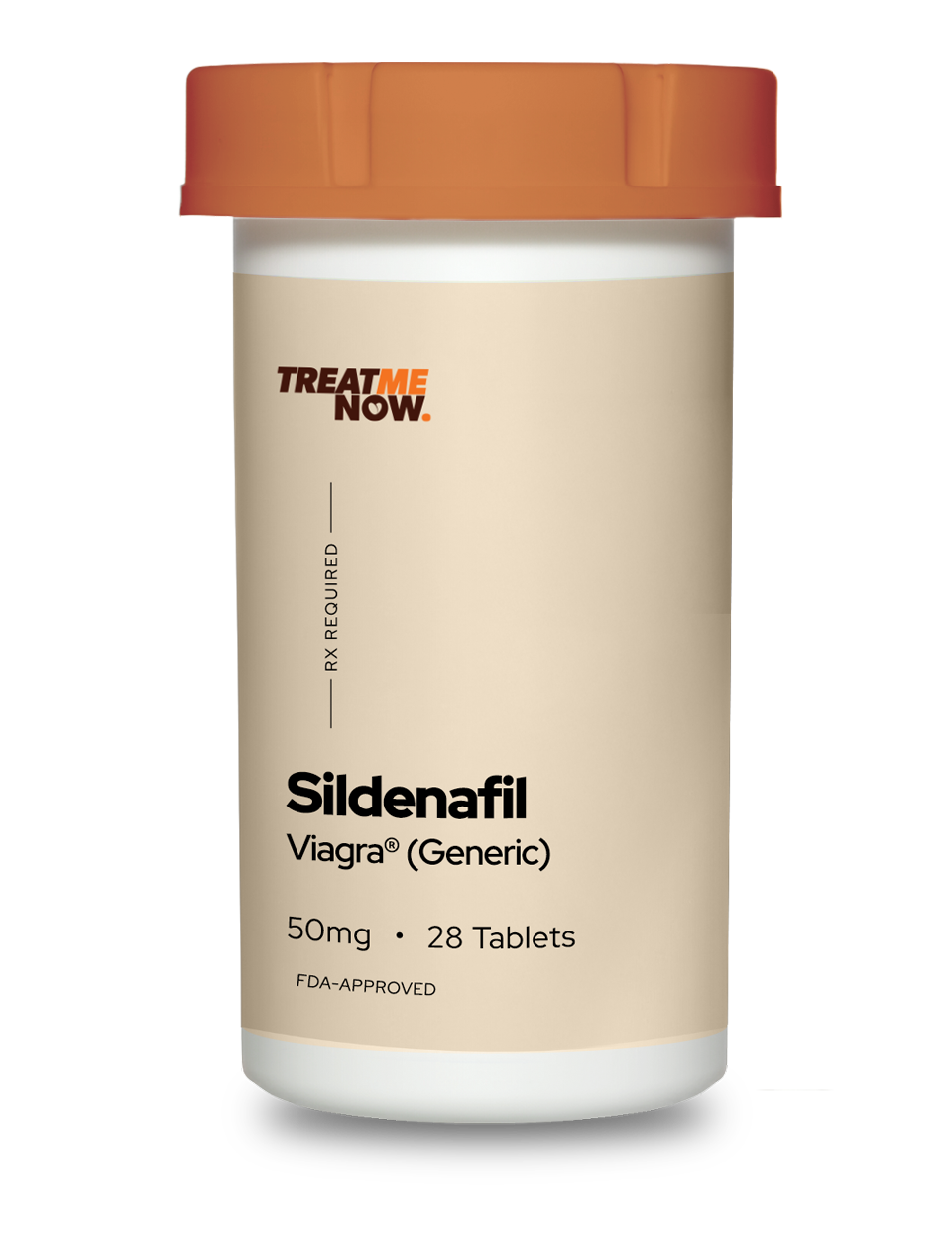
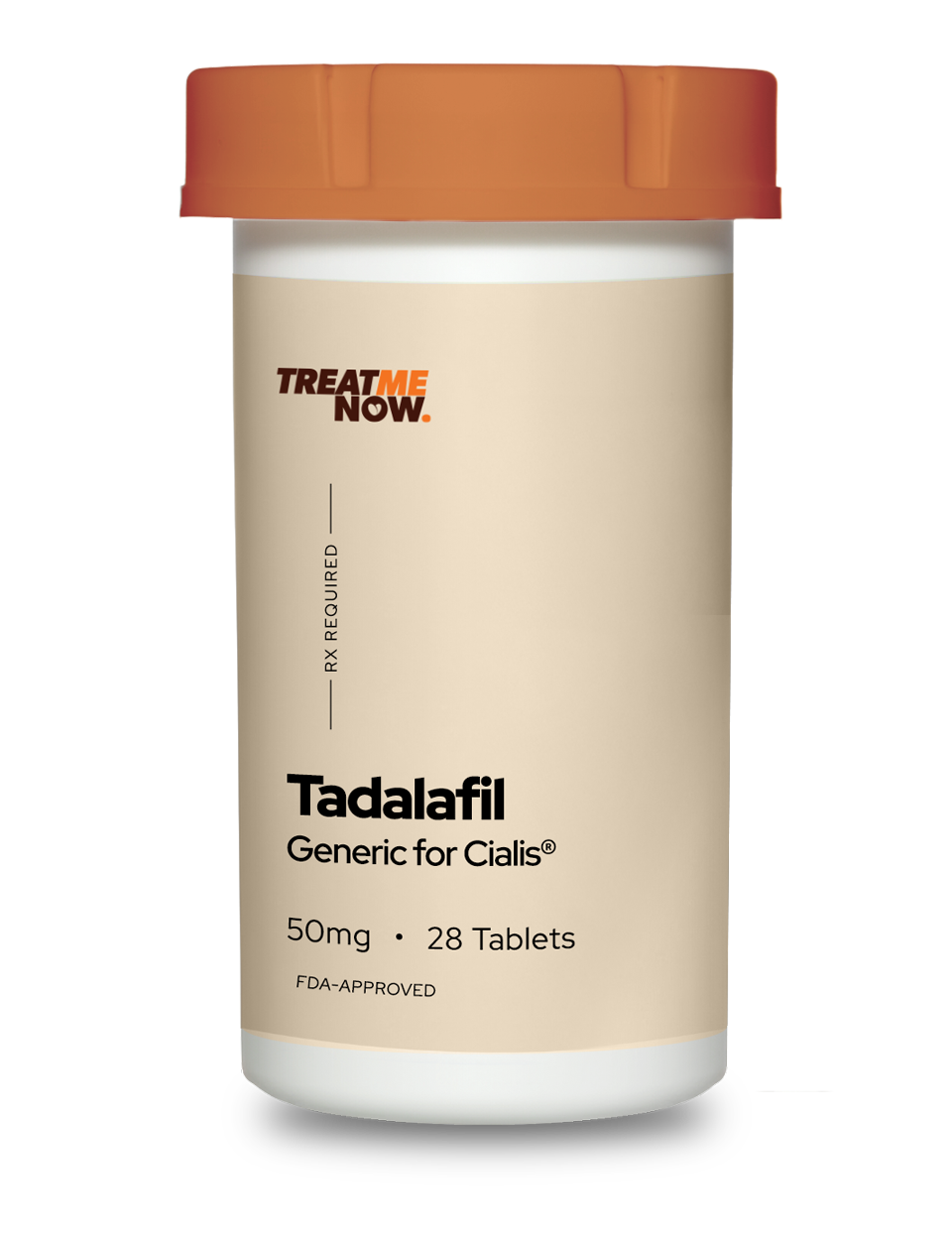
Sildenafil and tadalafil don't interfere with any of the steps above. What they do is block PDE5 from doing its usual job of breaking cGMP down. [1] With PDE5 blocked, cGMP sticks around longer and builds up to higher levels than it normally would, which means the muscle relaxation and blood flow that arousal produces last longer and happen more reliably.
This is why sexual stimulation is still required for either medication to do anything. The drug isn't manufacturing arousal from nothing. It's removing one of the brakes on a process your nervous system still has to start. Without that initial nitric oxide signal, there's nothing for the medication to amplify.
Why Sildenafil and Tadalafil Aren't Identical at the Molecular Level
PDE5 isn't the only enzyme in this family. There are 11 known PDE types in the body, and PDE5 inhibitors were specifically designed to target PDE5 as precisely as possible. In practice, neither sildenafil nor tadalafil is perfectly selective. Each one has a small amount of overlap with a different, related enzyme, and that overlap explains a couple of side effects that would otherwise seem unrelated.
Sildenafil shows some cross-reactivity with PDE6, an enzyme concentrated in the retina. That's why sildenafil is more often associated with a temporary blue-green tint or increased light sensitivity. [1]
Tadalafil, on the other hand, shows greater cross-reactivity with PDE11, an enzyme found in skeletal muscle and other tissues, which aligns with tadalafil's higher reported rates of back pain and muscle aches. [2]
Neither of these overlaps is dangerous on its own, but they're a good example of how two medications built around the same core idea can still feel different in practice. Our guide to Viagra and Cialis side effects covers both in more detail.
The reason this cross-reactivity happens at all comes down to structure. PDE6 and PDE11 share enough similarity in their catalytic sites with PDE5 that a molecule designed to block one can partially bind the others as well. [3] Tadalafil and sildenafil simply land at slightly different points on that spectrum.
If you want to see how this plays out across other parts of treatment, our full blog on erectile dysfunction covers dosage, cost, and duration in more depth.
Why Nitrates Are Dangerous
Nitrate medications, commonly prescribed for angina and other heart conditions, work through the same cGMP pathway described above, just from a different starting point.
Instead of relying on arousal to trigger local nitric oxide release, nitrates flood the bloodstream with a nitric oxide signal, acting directly and systemically.
Combine that with a PDE5 inhibitor already preventing cGMP from breaking down, and the result is a much bigger spike in cGMP-driven vessel relaxation than either drug would cause on its own, throughout the whole circulatory system rather than just one area.
That combination can cause blood pressure to drop suddenly and dangerously. It's the core reason this specific interaction is treated as an absolute no and not just a caution.

Why ED Medications Need Arousal to Work
Since the entire mechanism depends on a nitric oxide signal your body has to generate first, nothing about taking Viagra or Cialis bypasses the need for real stimulation.
This trips up a lot of people. The medication isn't a replacement for arousal. It's a way of making your body's own response to arousal last longer and work more consistently once it starts.
That also explains why factors that interfere with arousal itself, anxiety, distraction, alcohol, and fatigue, can still get in the way even when the medication is working as designed. The drug can't amplify a signal that never gets sent. A licensed healthcare provider, including those reviewing consultations through TreatMeNow, can help sort out whether the issue is the medication itself or something else getting in the way.
FAQ: Why Doesn't Viagra or Cialis Work Every Time?
This is one of the most common frustrations people run into, and it usually has nothing to do with the medication failing. Since sildenafil and tadalafil both depend on your body generating a nitric oxide signal first, anything that interferes with that signal, stress, distraction, alcohol, or a stressful day, can result in a less reliable response even though the drug itself is doing what it's supposed to.
Also worth noting that this isn't an instant, guaranteed process. Adequate stimulation still matters, and a rushed or distracted encounter can yield a weaker result than a relaxed one, with or without medication.
If this has been happening to you, here's what you can do:
- Rule out alcohol or a heavy meal beforehand. Both can interfere with how reliably the medication works, particularly for sildenafil.
- Pay attention to anxiety or stress in the moment. Performance anxiety specifically can suppress the nitric oxide response that the medication depends on.
- Give yourself enough time and stimulation. The medication amplifies a response. It doesn't generate one instantly from nothing.
- Track your experience over a few uses rather than judging based on a single attempt. Occasional inconsistency is common and doesn't necessarily mean anything is wrong.
- If it's happening consistently rather than occasionally, bring it up with your provider. A dose adjustment or a different medication may better fit your situation.
Disclaimer This article is shared for general informational purposes and isn't intended as medical advice. It shouldn't replace a consultation with your doctor or another licensed healthcare provider, especially when it comes to medications, diagnoses, or treatment decisions. Always check with a qualified professional before making changes to your health or care plan.
References
- K-E Andersson PDE5 inhibitors – pharmacology and clinical applications 20 years after sildenafil discovery
- Eli Lilly Canada CIALIS (tadalafil) Product Monograph
- Gülru Kayik, Nurcan S. Tüzün, and Serdar Durdagi Investigation of PDE5/PDE6 and PDE5/PDE11 selective potent tadalafil-like PDE5 inhibitors using combination of molecular modeling approaches