What Causes Erectile Dysfunction? Common Physical and Mental Factors
There's rarely a single cause behind erectile dysfunction. For most men, it's a combination of physical, psychological, and lifestyle factors working together, not one isolated problem with an obvious fix. Understanding what's driving your symptoms is often the difference between treatment that works and treatment that only addresses part of the picture.
What Causes ED?
Cardiovascular and hormonal conditions can cause erectile dysfunction, psychological factors like stress and anxiety, certain medications, and lifestyle habits such as smoking or heavy drinking.
Medical understanding of ED has shifted substantially over the past few decades. It was once widely assumed to be mostly psychological, but for most men, a physical cause plays a significant role, often alongside a psychological one. [1]
Physical Causes of Erectile Dysfunction
Physical causes often involve blood flow, nerve signaling, or hormone levels, since all three are required for a normal erection.
- Cardiovascular conditions. High blood pressure, high cholesterol, and narrowed or damaged blood vessels can restrict blood flow to the penis. This is one of the most common physical causes, and one of the most significant to catch early.
- Diabetes. High blood sugar over time can damage both blood vessels and the nerves involved in achieving an erection.
- Hormonal changes. Lower testosterone can reduce both sexual desire and erectile function, and becomes more common with age.
- Neurological conditions. Parkinson's disease, multiple sclerosis, stroke, and spinal cord or pelvic nerve injuries can all interfere with the nerve signals that an erection depends on.
- Certain medications. Some antidepressants, blood pressure medications, and other prescription drugs list ED as a possible side effect. [2]
- Prostate or pelvic surgery. Procedures involving the prostate or bladder can sometimes affect nearby nerves involved in erectile function.
At a cellular level, many of these physical causes trace back to something called endothelial dysfunction, damage to the lining of blood vessels that reduces the body's ability to produce nitric oxide. Since nitric oxide is the signal that starts the entire erection process, anything that disrupts it can have a substantial effect on erectile function, regardless of which underlying condition caused the damage in the first place. [2]
Psychological Causes of Erectile Dysfunction
Psychological factors are common on their own and frequently show up alongside physical causes, making the two difficult to fully separate.
- Stress and anxiety, whether from work, finances, or other areas of life, can interfere with the body's ability to respond to arousal.
- Performance anxiety specifically, where worry about a past difficulty creates a cycle that makes future difficulty more likely.
- Depression, which can affect both desire and physical response, partly through changes in brain chemistry and partly through the medications sometimes used to treat it.
- Relationship stress or unresolved conflict can affect sexual function even when nothing physical is wrong.
None of this makes the symptoms any less real. A psychological cause is still a legitimate medical concern, not something to dismiss as "all in your head."

Lifestyle Factors That Contribute to ED
Several everyday habits are consistently linked to higher rates of erectile dysfunction, mostly because they overlap with the same cardiovascular and hormonal systems involved in the physical causes above.
- Smoking, which damages blood vessels over time, is one of the most well-documented modifiable risk factors for ED.
- Heavy alcohol use can interfere with both the nervous system and hormone levels.
- A sedentary lifestyle, since regular physical activity supports the same cardiovascular health that erections depend on.
- Poor sleep, including undiagnosed sleep apnea, has a documented association with lower testosterone and higher rates of ED.
- Obesity, which is linked to diabetes, cardiovascular disease, and lower testosterone, all of which independently raise ED risk.
The encouraging side of this list is that these factors are modifiable. Substantial improvement is often possible through lifestyle changes alone, and even when they aren't enough on their own, addressing these factors tends to make other treatments work better. [3]
Why ED Can Be an Early Warning Sign
One of the more important things to understand about ED is that it can show up before other symptoms of cardiovascular disease do.
The blood vessels supplying the penis are smaller than the ones supplying the heart, so vascular damage can sometimes affect erectile function first, functioning as an early signal rather than a coincidence. In one large real-world study, men with ED had substantially higher rates of hypertension, high cholesterol, and diabetes than men without it, and a large share of those conditions were going untreated at the time. [4]
This is part of why ED deserves a proper medical conversation with a licensed healthcare provider, like the ones reviewing consultations through TreatMeNow, rather than a quiet workaround. Beyond treating the symptom itself, it can be a genuine opportunity to catch something bigger while it's still manageable.
How Causes Connect to Treatment
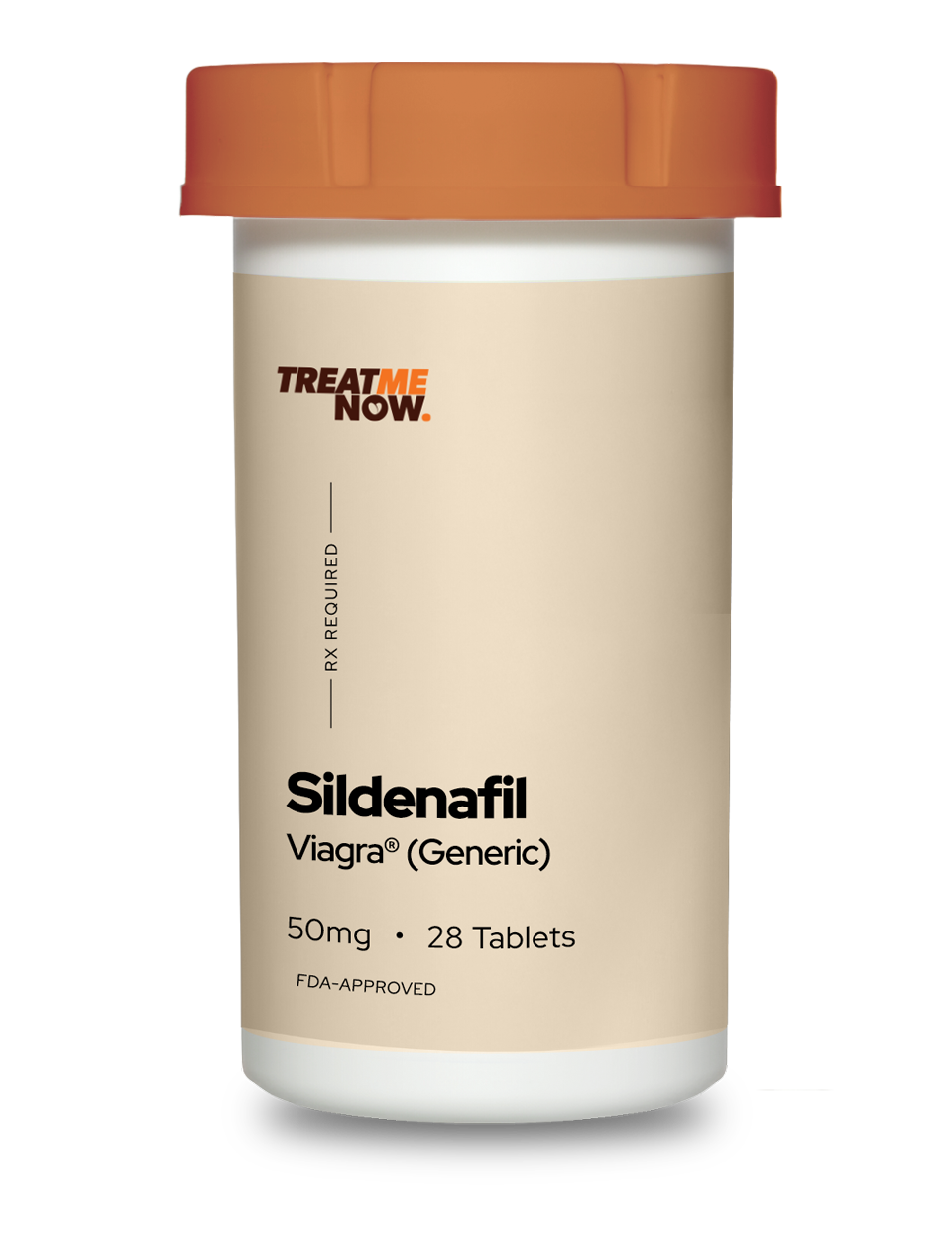
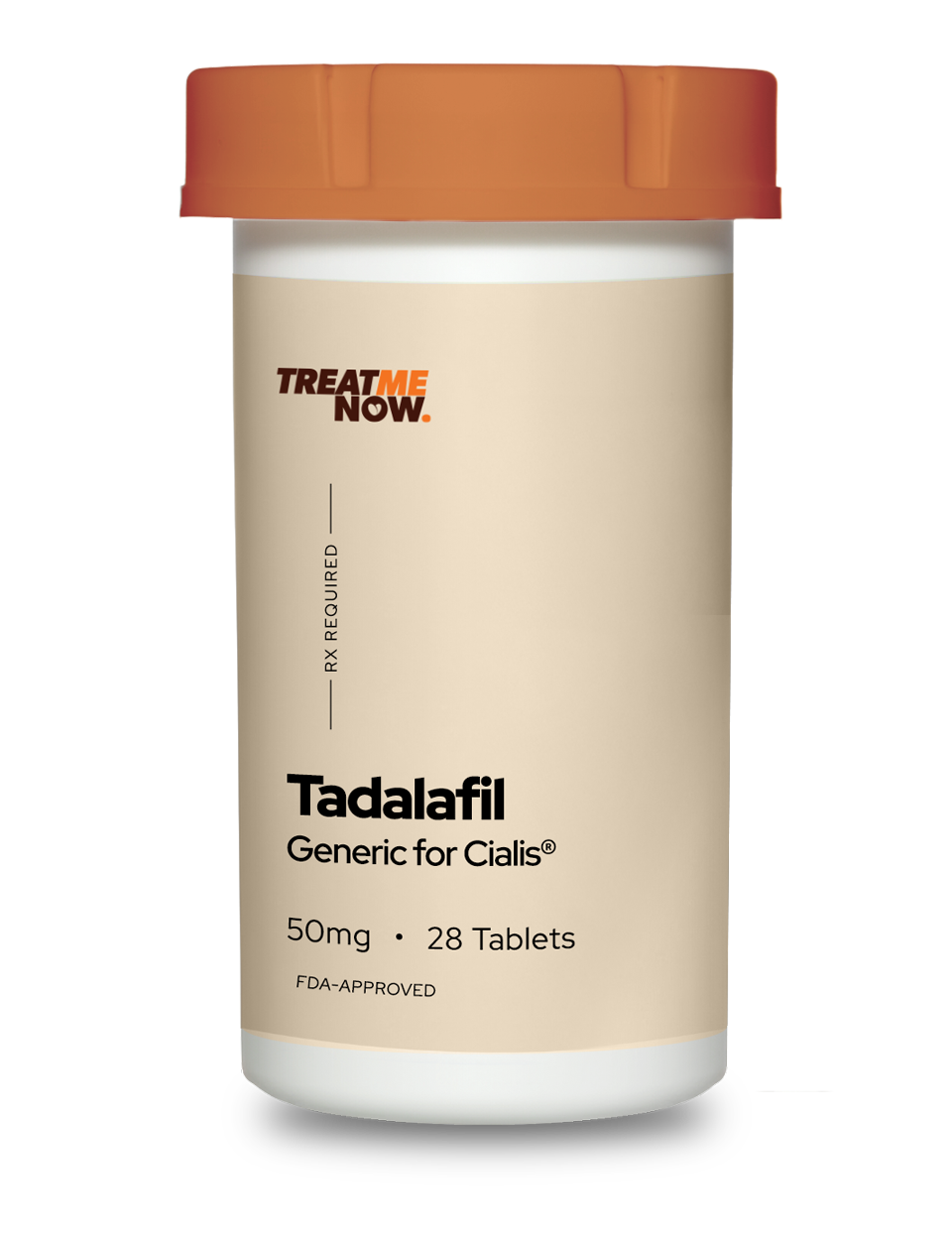
Identifying the cause matters, but it doesn't always change the immediate treatment path. Medications like sildenafil and tadalafil work by improving blood flow during arousal, regardless of whether the underlying cause is cardiovascular, hormonal, psychological, or a mix of several factors.
For a lot of men, that makes them a reasonable starting point while any underlying cause is being addressed in parallel, not an either-or choice.
Our main guide to ED treatment in Canada covers the full range of options, our guide to getting Viagra online in Canada walks through what starting treatment looks like, and our full blog on erectile dysfunction covers everything else, from cost to side effects to dosage.
FAQ: Is Erectile Dysfunction Just a Normal Part of Getting Older?
Not directly, though it can feel that way, given how often the two get lumped together. Age itself isn't a direct cause of ED. What happens instead is that the risk factors behind ED, cardiovascular disease, lower testosterone, and certain medications become more common as men get older.
Age is more of an indirect marker than a true cause on its own, meaning ED isn't something to simply accept as an unavoidable part of getting older. Most of the conditions behind it are identifiable and, in many cases, treatable or manageable.
Here's how to think about it if you're wondering whether your symptoms are "just age."
- Don't dismiss ED as something to accept without question, regardless of your age. Treatable causes are common at every stage of adulthood.
- Think about whether symptoms started around the same time as a new medication, health diagnosis, or major lifestyle change.
- Ask about getting relevant markers checked, such as blood pressure, blood sugar, and cholesterol, since ED can be an early sign of conditions you might not yet know about.
- Bring it up with a licensed healthcare provider, even if it feels minor or is only occasional. An earlier evaluation makes it easier to catch something manageable before it becomes bigger.
- Know that effective treatment exists regardless of your age or the underlying cause. Managing symptoms and addressing the root cause aren't mutually exclusive.
Disclaimer This article is shared for general informational purposes and isn't intended as medical advice. It shouldn't replace a consultation with your doctor or another licensed healthcare provider, especially when it comes to medications, diagnoses, or treatment decisions. Always check with a qualified professional before making changes to your health or care plan.
References
- Johns Hopkins Medicine Erectile Dysfunction
- Satya S. Vasan, Sanjay Pandey, Sathyanarayana T. S. Rao, et al. Association of Sexual Health and Mental Health in Erectile Dysfunction
- Katherine Esposito, Francesco Giugliano, Carmen Di Palo, et al. Effect of lifestyle changes on erectile dysfunction in obese men: a randomized controlled trial
- Jim Z. Li, Terence A. Maguire, Kelly H. Zou, et al. Prevalence, Comorbidities, and Risk Factors of Erectile Dysfunction: Results from a Prospective Real-World Study in the United Kingdom.